5 things a Rust streamer server reveals about clans, rules and raiding
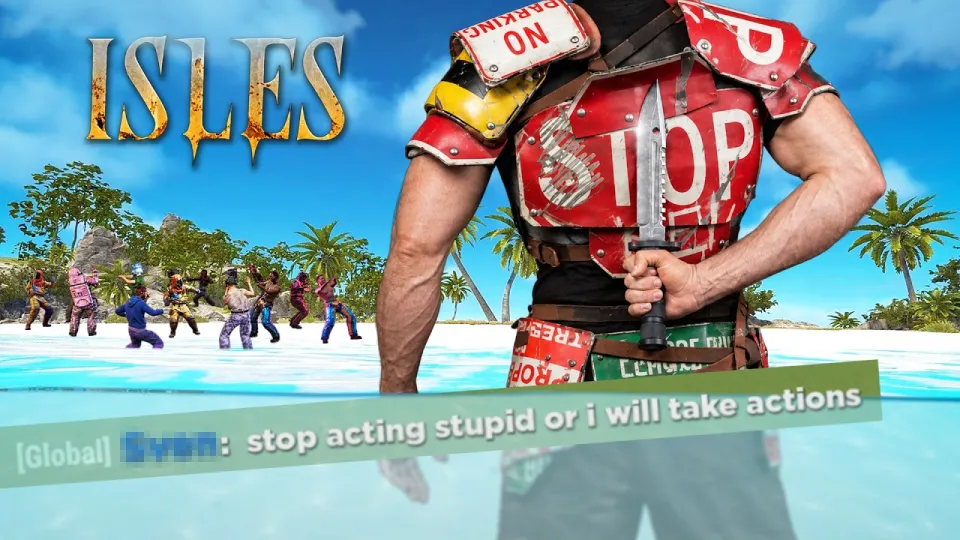
Video: Not Another Rust Streamer Server
Want articles like this for your own video to promote it on YouTube and Google? Order them through the Telegram bot @sat_sit_bot. Articles with your video embedded are written and posted by the bot itself — on popular topical sites (no ads). Your first 50 articles are free.
· based on the channel Stimpee
Key takeaways
- Rust Isles is a private, invite-only streamer server with a pirate/roleplay theme and active admin moderation.
- Stimpee returned to a streamer server after years away and was given access to Rust Isles.
- Admins reportedly inspected his inventory to remove weapons, showing how closely streamer servers are policed.
- Clan recruitment on such servers is often informal: leaders invite players without vetting loyalty.
- Streamer servers turn Rust's survival sandbox into a social experiment where betrayal reads as content, not griefing.
A Rust streamer server is a private, invite-only Rust world built for content creators, usually with a theme, active admins and a social contract that replaces the chaos of public servers. Rust Isles, the pirate-flavored server Stimpee was given access to, is the clearest recent example: a small population of streamers, heavy moderation and roleplay expectations layered on top of normal survival mechanics. You can watch the full run on Stimpee's Twitch channel, where the streams behind the video originally aired.
What a Rust streamer server actually is
A streamer server is a whitelisted Rust server where access is granted by invitation rather than by queue, and the population is made up of people whose job is to be entertaining on camera. That single change rewrites most of Rust's incentives. On a public server, a wipe is anonymous: you farm, you build, you get raided by strangers and you never learn their names. On a streamer server, everyone knows everyone, every raid is watched by an audience, and reputation travels faster than loot.
Rust Isles leans into this with a pirate theme, which implies boats, coastal bases, crews and a certain amount of theatrical villainy. The practical result is a server that behaves less like a survival game and more like a persistent social lobby: groups form in voice chat, alliances are announced on stream, and admins are visible enough to intervene in real time. Stimpee's return to this format after years away is the hook of the video, but the more useful takeaway is how the format changes player behavior.
Why admins watch certain players constantly
Admins on streamer servers treat a handful of players as walking risk factors, and Stimpee is the textbook case. Viewer reaction to the video made the point bluntly: moderators are so wary of him that they reportedly went into his inventory to strip weapons before he could use them. That is not normal Rust moderation. On a public server, an admin checking your inventory is an accusation; on a streamer server, it is closer to routine maintenance of the show.
The logic is straightforward. A streamer server exists to produce watchable content for many channels at once, and one player who builds trap bases, hijacks boats or turns a friendly gathering into a massacre can dominate the entire server's narrative for a week. Admins therefore intervene earlier and more visibly than they would elsewhere. For a solo player used to public servers, the lesson is that rules on these servers are enforced socially first and mechanically second: the punishment for being too disruptive is attention, not a ban.
How clan recruitment fails on invite-only servers
The most instructive failure in the video is a clan leader recruiting a known troll without asking a single question about loyalty. A pirate-themed crew invites a new member, hands him access to a boat, and then acts surprised when the boat leaves with him and the rest of the crew stranded on an island. The subsequent meltdown in chat is the least interesting part; the recruitment process is the real story.
On public Rust, clan recruitment is slow and suspicious because betrayal costs real progress. On a streamer server, recruitment is fast because the point is to generate a storyline, and the people doing the recruiting are often performing for their own audience. That mismatch produces exactly this outcome. Three practical rules follow for anyone joining a themed crew:
- Vet loyalty through small tasks before giving access to vehicles or shared loot rooms.
- Treat roleplay betrayal as a legitimate outcome, not a rule violation, unless the server explicitly forbids it.
- Keep a personal stash outside the clan base, because clan storage is the first thing to disappear.
The stranded-crew incident also exposes a common inconsistency: a pirate server that punishes stealing is a pirate server with a confused rulebook. If the theme invites plunder, the rules need to say clearly where plunder stops.
What streamer servers reveal about Rust's social layer
The recurring viewer observation about these servers is that they feel like a school playground staffed by adults, and that is a fair description of the format's appeal and its weakness. Rust's survival loop is already a social game: farming, trading, raiding and betraying are all negotiations with other people. Remove anonymity and add cameras, and those negotiations become the entire content.
That shift explains several patterns visible across streamer server videos, including this one:
- Reputation replaces gear score. Being known as dangerous is worth more than a box of rockets.
- Raids become performances. An online raid with an audience is paced differently from a quiet offline job at 4 a.m.
- Solos adapt or leave. A solo player on a streamer server survives by being useful, invisible or entertaining enough that nobody wants to wipe him.
- Admin attention is a resource. Being watched closely is a cost, but it also means your actions matter to the server's story.
Stimpee's run fits this pattern precisely. He arrives as an outsider, is treated as a hazard by staff, exploits a clan's trust and leaves with the boat. None of that is unusual Rust behavior; what is unusual is that the whole server reacts to it as a shared event.
Common questions about streamer servers answered
Most confusion about these servers comes from viewers applying public-server expectations to a private, moderated world. Access is the first difference: you cannot simply join Rust Isles, because entry is by invitation from the operators or through being a recognized creator. Population is the second: a few dozen streamers produce far more drama per square kilometer than a 200-slot public server, and far less random violence.
The third difference is moderation style. Public server admins usually act on reports of cheating or exploits; streamer server admins act on anything that threatens the server's watchability, which includes a single player becoming too dominant. That is why inventory checks, forced truces and informal warnings are common there and almost unheard of elsewhere. The fourth difference is consequence: a wipe on a streamer server is a reset of a story that many people are watching, so grudges carry across wipes in a way they never do on public servers.
Useful links
- Stimpee on Twitch — live Rust streams and the source of the Rust Isles run.
- Stimpee on Twitter — schedule updates and clip announcements.
- Stimpee on Instagram — shorter clips and behind-the-scenes posts.
- Stimpee's Discord — community chat and server news.
The takeaway
A Rust streamer server is best understood as a pressure test for the game's social systems rather than a softer version of Rust. Rust Isles shows that when anonymity disappears, clans recruit carelessly, admins police personalities instead of cheats, and a single troll can steer an entire server's week. Stimpee's return to the format works as a case study because he tests every rule at once: theft, loyalty, admin patience and the boundary between roleplay and griefing. If you want to see how those rules hold up live, the place to start is Stimpee's Twitch channel. The channel's edit of the run is the most compact way to watch the experiment play out.
Questions & answers
Can anyone join a Rust streamer server like Rust Isles?
No. These servers are whitelisted and invite-only, with access granted by the operators to content creators and people they want on the server. Rust Isles in particular is a private, themed server, so there is no public queue or application link to join from a video description.
Why do admins on streamer servers check players' inventories?
Because the goal is keeping the server watchable for many channels at once. One player who hoards explosives or turns every gathering into a fight can dominate the whole server's storyline, so staff intervene early, sometimes by removing weapons directly rather than issuing a ban.
Is betraying a clan against the rules on a roleplay server?
Usually not, unless the server explicitly bans it. Themed servers often invite plunder and double-crossing as part of the setting, and the friction comes from leaders who treat loyalty as guaranteed. Clear written rules about stealing are what separate roleplay from a rules dispute.
Is a streamer server easier for a solo Rust player?
It is different rather than easier. Random offline raids are rarer because the population is small and known, but admin attention is heavier and reputation matters more than gear. A solo survives by being useful, low-profile or entertaining enough that nobody prioritizes wiping them.